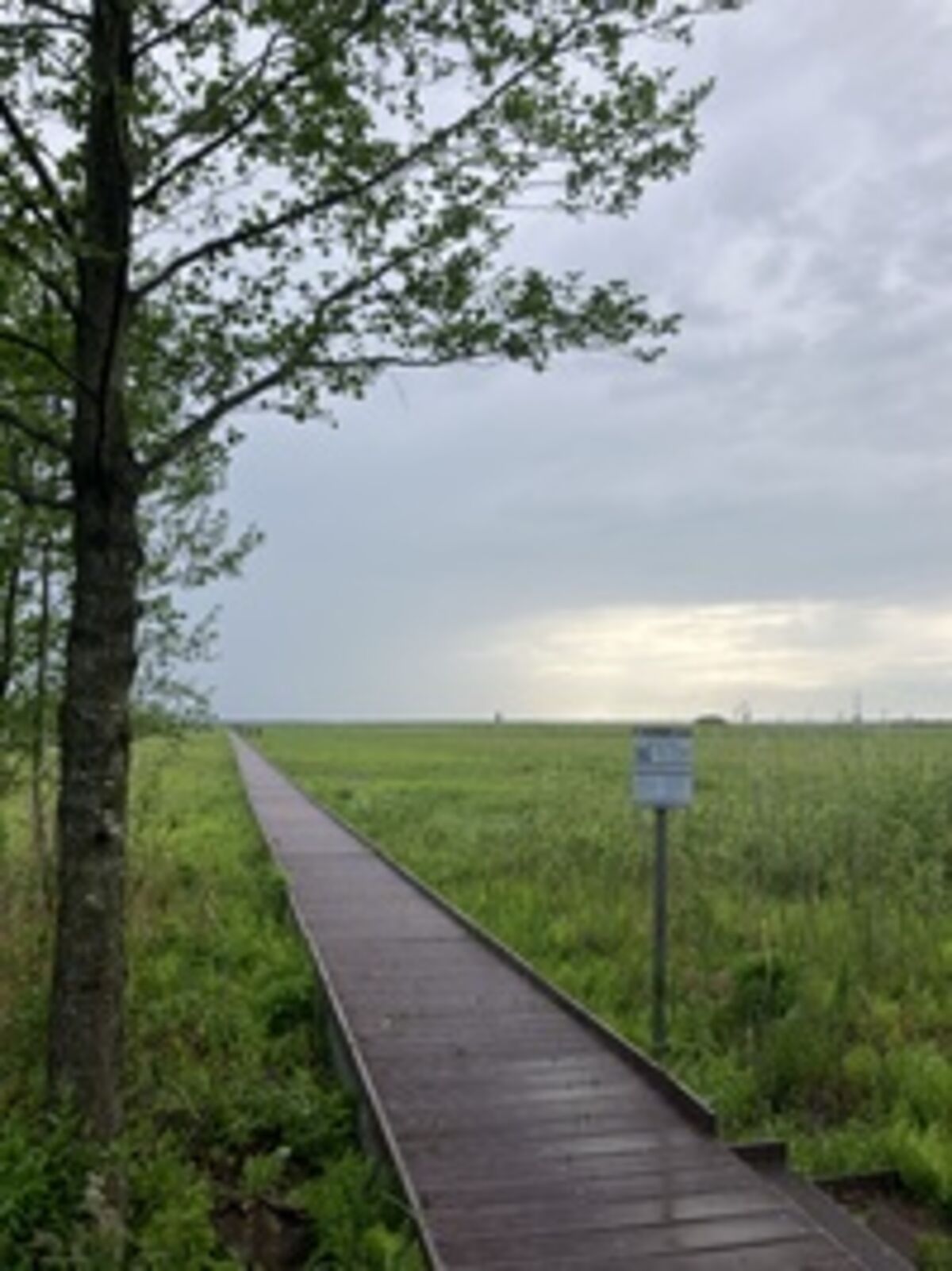
Why peatlands?
Peatlands are wetlands in which permanent waterlogging and the resulting lack of oxygen prevent the decomposition of dying plant matter; instead, it accumulates on site, thereby preserving the CO2 sequestered during photosynthesis. When 30% of what remains after drying consists of dead organic material, this is referred to as peat. In Germany, such a wetland is defined as a growing mire when the peat layer reaches a thickness of 30 cm and is still actively forming. On average, one millimetre of peat is formed in a peatland each year.
… is their multi-layered nature, which refers not only to the peat layers that are often metres thick. One of their most important functions is their ability to store huge amounts of carbon in a very small area. For instance, 30% of the world’s soil carbon is found in peatlands, which, by contrast, cover only 3.8% of the Earth’s land surface. That is twice the amount of carbon stored in the biomass of all the world’s forests.
Peatlands also host a high level of biodiversity, although the number of species is often slightly lower than in other ecosystems within the same geographical region. However, the species are usually found only in specific types of peatland because they are highly specialised and adapted to the particular and extreme conditions. For plant species, these include, for example, permanent waterlogging and the associated lack of oxygen in the root zone. Species have also adapted in various ways to the lack of nutrients, which would otherwise pose a challenge for many species; one example is the insect-catching sundew. In Europe, around 50% of all threatened bird species depend on peatlands. These include, for example, the crane, which breeds in intact peatland landscapes.
The complexity of peatlands represents an immeasurable asset. As peat accumulates layer by layer, the history of the area is archived thanks to partially decomposed plant remains, as well as that of the surrounding environment in the form of pollen and spores. This enables researchers, particularly those in palaeoecology, to draw conclusions about past states of the ecosystem as well as climatic conditions and events.
As wetlands, peatlands with their high evaporation rates help to cool their surroundings, provide drinking water, serve as retention areas for flood protection, and store water for dry periods.
As human life is closely linked to the presence of water, people have always lived near peatlands. For many, they are a place of identification, inspiration and recreation, and their preservation maintains the connection to home.
Globally, peat accumulation has stopped in 12% of all peatlands. 10% of this is due to the extraction of peat for fuel and as an additive in potting soil. Far larger areas are used for agriculture (50%) and forestry (30%). The remaining 10% is attributable to the development of critical infrastructure such as oil extraction, transport routes, and urban and residential development.
In drained peatlands, the rapid decomposition of previously preserved organic material resumes due to exposure to oxygen-rich air. This releases enormous quantities of CO2 and N2O – 0.3% of the world’s land area is responsible for 5% of all anthropogenic CO2 emissions. Drained peatlands thus contribute to the intensification of the greenhouse effect and to global warming. Drainage also leads to soil subsidence and the permanent loss of land and peatlands, compounded by rising sea levels.